By Fathima Rukaiya,
The world beneath the waves is one of the most breathtaking spectacles on Earth, a colorful realm of coral gardens, exotic fish, sea turtles, and crystal-clear waters. Whether you’re an experienced diver or a first-time snorkeler, there are destinations across the globe that promise unforgettable marine encounters.
Here are seven of the best places to snorkel in the world, featuring what makes each spot unique, what’s available there, and when to visit.
1. Great Barrier Reef — Australia

Stretching over 2,300 kilometers, the Great Barrier Reef is the largest coral reef system on Earth and one of the most iconic snorkeling destinations. Located off the coast of Queensland, this UNESCO World Heritage Site hosts more than 1,500 species of fish, 400 species of coral, and an array of marine life including sea turtles, rays, and reef sharks.
Best Time to Visit:
June to October offers the clearest waters and calm seas, ideal for snorkeling.
Facilities and What’s Available:
- Snorkel Tours: Day trips and multi-day cruises depart from Cairns, Port Douglas, and Airlie Beach.
- Marine Parks: Well-regulated zones like Agincourt Reef and Green Island provide beginner-friendly snorkeling.
- Gear Rental: High-quality snorkel gear and wetsuits available on all tour boats.
- Accommodation: From eco-resorts on the reef to city hotels in Cairns, there’s something for every budget.
- Many operators now include reef education sessions and coral restoration experiences.
Always use reef-safe sunscreen to help protect the fragile corals.
2. Maldives
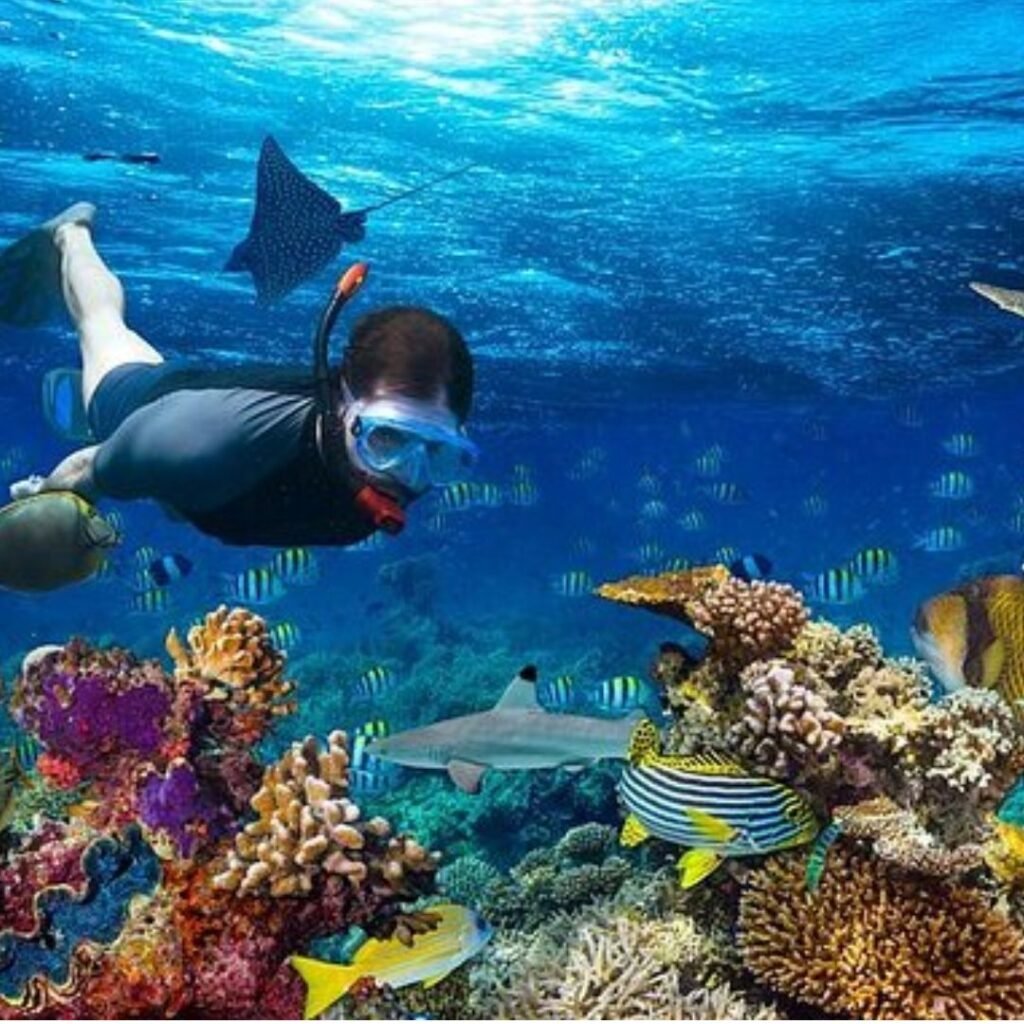
The Maldives, which consists of more than 1,000 islands and 26 coral reefs, have some of the planet’s purest oceans and most colorful marine environments. You can literally step off your water villa into a coral garden flourishing with angelfish, clownfish, manta rays, and sometimes whale sharks.
Best Time to Visit:
November to April, during the dry northeast monsoon season, when visibility is excellent.
Facilities and What’s Available:
- Resort Reefs: Most resorts have private house reefs accessible directly from the beach or villa.
- Guided Tours: Resorts organize guided snorkeling safaris to nearby reefs and manta cleaning stations.
- Marine Life: Expect to see turtles, eagle rays, reef sharks, and occasionally dolphins.
- Accommodation: Luxury water villas, mid-range guesthouses, and eco-friendly island lodges.
- Many resorts have coral nurseries and marine biologists on staff.
Early morning snorkels often reward you with sightings of manta rays or reef sharks cruising by the reef edge.
3. Hanauma Bay — Oahu, Hawaii, USA

Formed in a volcanic crater, Hanauma Bay is one of the most beautiful snorkeling locations in Hawaii. Protected as a nature preserve, it’s home to a rich ecosystem of coral and over 400 species of tropical fish.
Best Time to Visit:
April to October, when the water is calmest and visibility is highest.
Facilities and What’s Available:
- Visitor Education Center: All visitors must watch a short conservation video before entering.
- Facilities: Restrooms, showers, snack bars, and lifeguards on duty.
- Gear Rentals: Snorkel sets and float vests available on-site.
- Transport: Easily reachable from Honolulu by car or shuttle.
- Strict visitor limits and reef protection rules help preserve marine life.
Arrive early in the morning to avoid crowds and enjoy calm waters.
4. Raja Ampat — Indonesia

Located in West Papua, Raja Ampat is considered the “crown jewel” of the Coral Triangle. With more than 1,500 small islands and over 75% of the world’s coral species, it’s one of the most biodiverse marine ecosystems on the planet.
Best Time to Visit:
October to April, when the seas are calm and visibility reaches up to 30 meters.
Facilities and What’s Available:
- Snorkel Sites: The coral diversity of Cape Kri, Arborek Jetty, and Friwen Wall is highly praised.
- Accommodation: Lodging options include luxury liveaboard ships, eco-lodges, and homestays.
- Guided Trips: Local businesses provide diving and snorkeling excursions under the direction of marine biologists.
- Marine Life: Be prepared for enormous schools of fish, reef sharks, beautiful corals, and enormous clams.
- Conservation: Community-based tourism ensures locals benefit while protecting reefs.
Bring your own reef-safe gear and respect the “no-touch” coral rule; everything here is alive and delicate.
5. Belize Barrier Reef — Belize

The Belize Barrier Reef, the second largest in the world, stretches for over 300 kilometers along Central America’s Caribbean coast. Its turquoise waters and coral Cayes (small islands) offer some of the best shallow-water snorkeling in the region.
Best Time to Visit:
February to May offers calm seas and great visibility.
Facilities and What’s Available:
- Top Sites: Hol Chan Marine Reserve, Shark Ray Alley, and the Great Blue Hole.
- Marine Life: Nurse sharks, stingrays, parrotfish, and sea turtles are commonly spotted.
- Tours and Gear: Snorkel tours depart from Ambergris Caye and Caye Caulker daily.
- Accommodation: Beachfront resorts, dive lodges, and eco-friendly stays.
Visit early morning to avoid the day-trip crowds and enjoy peaceful snorkeling with rays and turtles.
6. Galápagos Islands — Ecuador

The Galápagos Islands are world-famous for their unique wildlife, both on land and underwater. Snorkeling here offers the chance to swim alongside sea lions, penguins, marine iguanas, and even hammerhead sharks, all in one trip.
Best Time to Visit:
December to May brings warmer water temperatures and calmer seas, ideal for snorkeling.
Facilities and What’s Available:
- Guided Tours: Mandatory for most islands to protect the fragile ecosystem.
- Top Snorkel Spots: Kicker Rock, Devil’s Crown, and Bartolomé Island.
- Marine Life: Sea turtles, reef fish, rays, sea lions, and sometimes sharks.
- Accommodation: Cruise ships, eco-lodges, and island hotels.
- Regulations: Strict conservation rules; no touching animals or feeding marine life.
Bring a GoPro or underwater camera; sea lions are playful and often swim right up to you.
7. Bora Bora — French Polynesia

Bora Bora’s turquoise lagoon, surrounded by a barrier reef, is one of the world’s most picturesque snorkeling destinations. The calm, shallow waters make it perfect for beginners and families, while coral gardens and manta ray encounters attract experienced snorkelers too.
Best Time to Visit:
May to October, when the dry season offers clear skies and calm conditions.
Facilities and What’s Available:
- Snorkel Tours: Lagoon tours, coral garden trips, and shark-feeding tours are popular.
- Marine Life: Manta rays, reef sharks, butterflyfish, and vibrant coral formations.
- Accommodation: Luxury overwater bungalows and boutique island resorts.
- Extras: Sunset cruises, kayaking, and private lagoon picnics.
Take an early morning boat trip to catch the best light and the most active marine life.
Advice:
- Always use reef-safe sunscreen to protect marine ecosystems.
- Avoid standing on or touching corals; they are fragile living organisms.
- Check local regulations and follow guides’ instructions for safety and conservation.
- Bring your own snorkel mask if you prefer perfect fit and hygiene.
- Stay hydrated and wear a rash guard to protect against sunburn and jellyfish stings.
That’s some of the most beautiful and active snorkeling spots around the world. I suggest you do your own extra research to see which destination fits you best. Always follow the safety precautions, make sure you have proper health insurance in case of any injuries, and respect the local rules and marine life.
Happy snorkeling and stay safe!